
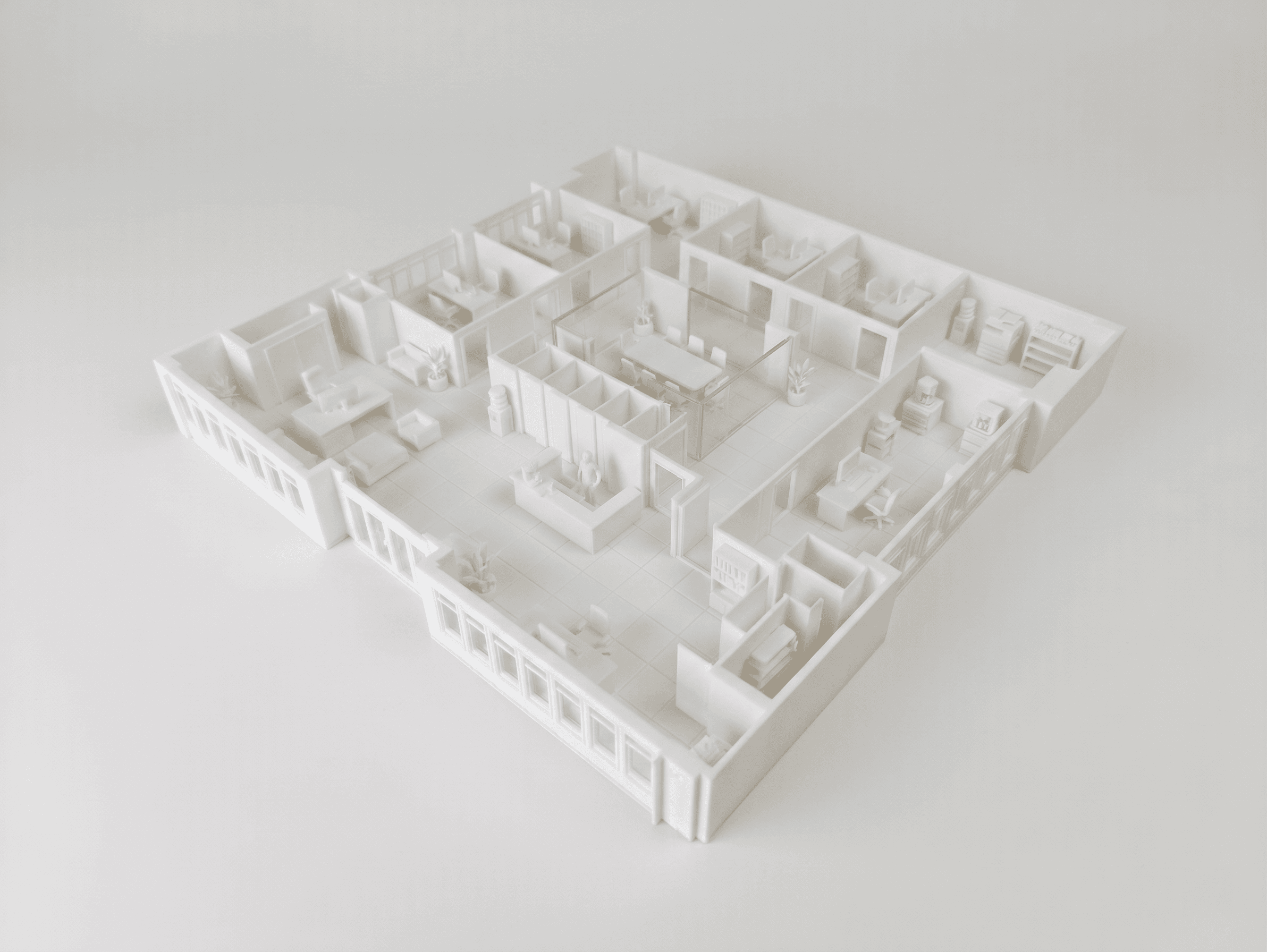
Architectural scale models have always been a sales tool. The problem is that the methods used to build them — hand fabrication, CNC milling, foam-core assembly — produce results that vary in quality, take weeks to deliver, and rarely survive multiple client presentations intact.
A Toronto architecture firm came to HexCode with a specific requirement: multiple floor plan models, scaled consistently to one another, finished well enough to sit on a boardroom table in front of paying clients. They needed them in 14 days. Every model held 0.05mm tolerance across spans exceeding 1200mm.
The Challenge
The firm was presenting a multi-unit residential development with several distinct floor plan configurations. Clients needed to physically compare the layouts — not read dimensions off a drawing, not squint at a PDF rendered on a screen. The models had to be scaled to one another with precision, so a client picking up one model and then the other could immediately feel the spatial difference.
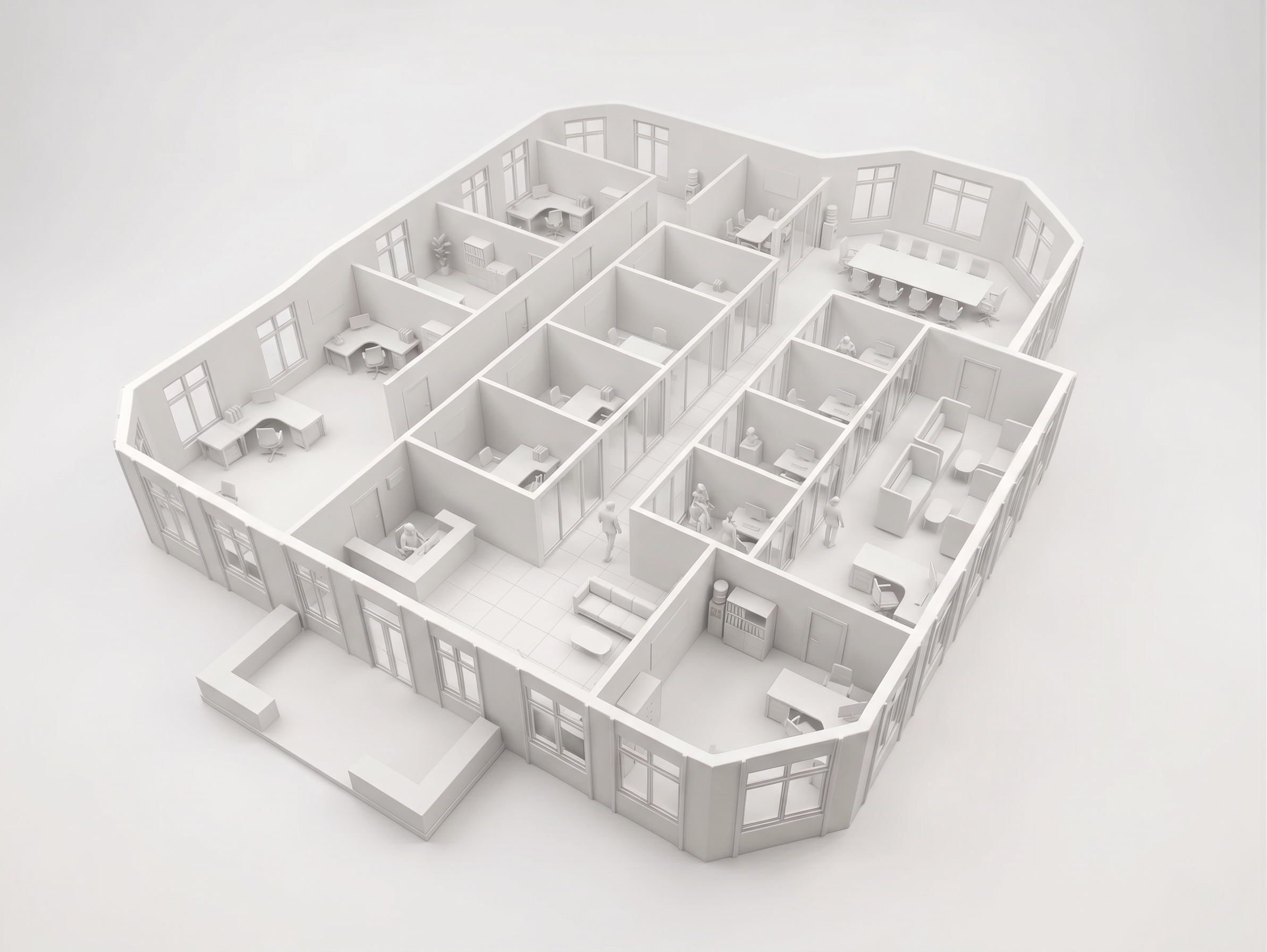
Traditional hand fabrication couldn't hold that level of consistency across multiple deliverables. CNC milling on this scale is slow, expensive per iteration, and produces parts that require significant post-processing to reach a finished surface quality. Foam-core assembly at these dimensions is fragile — the kind of model that doesn't travel well and doesn't photograph well. None of those methods could reliably produce identical scaling across multiple pieces, on a two-week timeline, without visible assembly seams breaking the read of the floor plan geometry.
The Approach
The geometry here was well-suited to large-format FDM. Floor plan models at 1:20 scale are primarily horizontal structures — walls, room partitions, threshold details — with relatively shallow Z-height. That profile plays directly to what a large build volume machine does well: wide, dimensionally stable prints where layer adhesion and warp control matter more than fine-feature resolution.
HexCode ran these on a custom large-format FDM printer with a 1000 × 1000 × 1500mm build volume, specifically tuned for large-scale architectural work. Material selection was matte PLA — chosen for its dimensional stability at these print spans, its surface finish straight off the build plate, and the fact that matte finish reads better in presentation contexts than glossy surfaces that pick up glare under boardroom lighting.
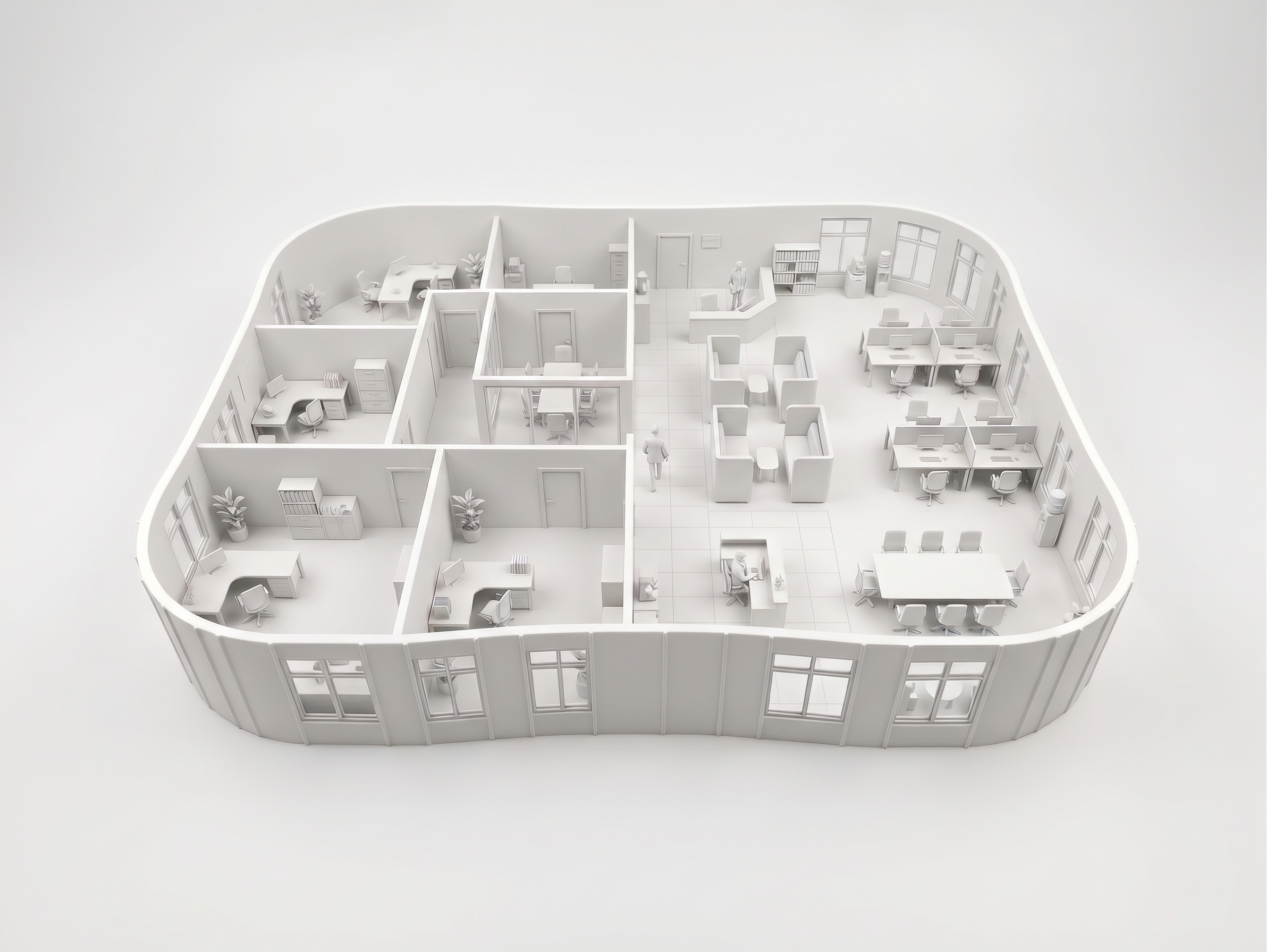
The critical process decision was print orientation and part count. Each floor plan model spanned over 1200mm in its longest dimension. Rather than splitting the model into sections and assembling post-print — which introduces seam lines and bonding variability — the geometry was oriented to print as a single piece. One part means no seams, no alignment tolerance stack-up between joined sections, and a structurally continuous deliverable that holds up to handling.
The Outcome
Multiple floor plan models delivered within a 14-day lead time, each holding 0.05mm tolerance across the full print span. Every model scaled precisely to the others — a client picking up the two-bedroom layout and then the three-bedroom layout is comparing geometry that was produced with the same calibrated parameters, not hand-assembled to approximate accuracy.
The firm presented to their clients with models that required no explanation or apology. The floor plans read immediately: room proportions, circulation paths, the relationship between living and sleeping zones. That's the downstream value — not just parts delivered on time, but a presentation tool that did the job it was built to do. The client moved forward with the development.
Why It Matters for Architecture Firms in Toronto
Architectural scale modelling is undergoing a quiet shift. Firms that used to budget weeks and significant fabrication spend for physical presentation models are finding that large-format 3D printing services in Toronto can produce the same deliverable faster, at lower cost, and with better dimensional consistency than traditional methods allow.
Large-format FDM at HexCode's scale eliminates the constraints of mid-format machines that require large architectural models to be split and assembled. For architecture and building design teams working with AutoCAD and BIM workflows, the translation from digital model to physical deliverable is now a matter of days, not weeks.